After studying English for years,
it's time to actually speak it.
Does this sound like you?
The moment to speak passes before you find the words. You had the thought. You knew the answer. But by the time you were ready to say it, someone else already had.You're not quiet in meetings because you don't have something to contribute. You're quiet because by the time you've put together the sentence (translated it, checked it, decided it's safe enough to say), the conversation has already moved on.It’s not that you don’t know English (you’re reading this and understanding, right?), it’s that you were never taught to use it in real time.You understand most of it. You follow a conversation, nod your understanding, and fill in the words you missed from context and keep moving. You write the email, eventually, after twenty minutes of tweaking sentences and rereading it at least twice before hitting send.Nothing about this is broken. You're functioning. But nothing about it feels natural or easy either. And after years of hard work, you're still waiting for the moment the language actually feels like yours.The person in that meeting is not the person your colleagues would meet if they spoke your language.That has a fix.
You were taught how the language works, not how to use it.
Think about what every English class you ever took actually measured: grammar, vocabulary, reading comprehension. The goal was the grade. And you got the grade.Nothing in that class asked you to think in English, speak in real time, or recover when you lost a word mid-sentence. Those things aren't easy to grade. But without it, you won't become fluent.Adults acquire languages when three things happen at once:
They get consistent exposure to language they can mostly understand.
They use it for real communication, not just in exercises.
They get structured practice with feedback over time.
That's not a secret method. There's no magic age or natural language ability you either have or don't. It's just what the research on adult language acquisition has been showing for decades, and what almost no language program is built to deliver.Your classes gave you grammar. Your apps gave you vocabulary. Your tutors gave you conversation hours with no plan connecting them. You got pieces of what you needed, never all of it in the right sequence.That’s not to say the tools are bad. Each one was built to do one specific thing very well. But none of them were built to do everything in one place.What's missing isn't more intelligence or effort. It's that nothing you've tried was designed to give you all three at once.Speaking a language isn't a test you pass. It's something you build. And the way most people have been taught to study has nothing to do with building it.That's why you've been working and not improving.
What changes with an effective method.
When the three things you actually need are finally working together, you start to notice change. Here's how you change:
Before: Staying quiet because you're afraid of sounding less than perfect.After: Speaking up with the English you already have, and working with the listener to be understood.
Before: Translating in your head before every sentence.After: Letting the English thought arrive in English.
Before: Avoiding the word you can't quite say and saying something unclear instead.After: Choosing another way to express your idea, recovering, and moving on.
Before: Taking hours to read, not understanding videos, and drilling grammar exercises with no payoff.After: Short, structured practice that actually helps you improve, and the rest of your English time spent on content you'd actually enjoy.
One of my current students came to me afraid to speak in meetings. We started small, by committing to say one small thing per meeting. Answer her manager's question about their weekend. Agree with a point. Anything.A month after tracking her participation streak, she noticed something. The hard days when she doesn't even turn on her camera and says nothing? They're just that: a bad day out of many okay or good days. Her streak is proof that she's putting in the work to participate more and more in her meetings.She is improving. She just needed a method that showed her that.
Here's where you start.
A free five-day email course to build real immersion into your actual life starting today, with the time and English you already have.
My name is Leisha Guzmán. I'm a linguist with a specialization in second language acquisition. I learned English as a second language at age 6 and have spent my entire life building on it.I also study Mandarin and Italian using the same methods I teach. When I say this works for adults, I'm not speaking theoretically.The course covers what you need to actually start improving:
How to build a listening practice that fits your level
How to capture and use the vocabulary you're already encountering
How to start using the English you have right now, without waiting until it's good enough
By day five, you'll be practicing differently than you were before you opened the first email. The right method is what produces results, not more hours, more apps, more discipline. You've already proven you have the discipline.
What's inside
Day 1: Use what you have.
The shift that changes how you show up before the week is over. You already have enough English to communicate more than you think.
Day 2: Build your immersion practice.
What comprehensible input actually means and how to fit an immersion practice into a day that's already full.
Day 3: Capture and use.
How to turn the content you're consuming into vocabulary and expressions you'll actually produce, and a simple system for making it stick.
Day 4: Track what you're doing.
Why tracking your practice matters more than tracking your level, and the tool I built to do exactly this, because nothing I found did the job.
Day 5: What comes next.
An honest map: when free resources are enough, when a tutor would help, and what to look for if a structured course is what you need.
After day five, the emails keep coming once a week, on what building a practice for adult language acquisition actually looks like in daily life.
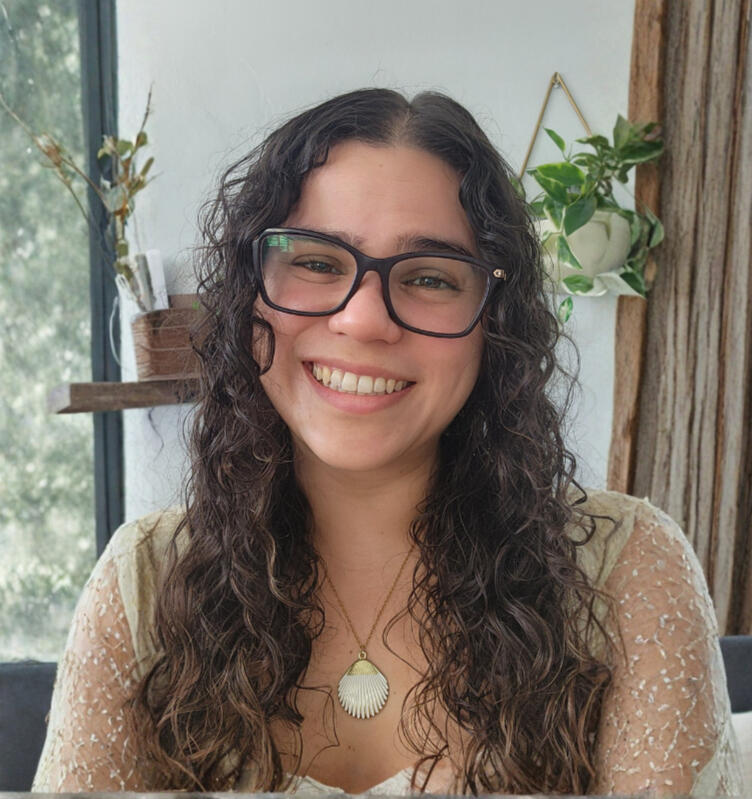
I spent years studying languages I couldn't speak. I could pass the tests but couldn't hold a real conversation.What made this failure strange was that I already knew it was possible to actually acquire a language. I had already done it with English.
I learned English when my family relocated to New Jersey. I was six. A year later, we moved back to Puerto Rico, where English class is mandatory from elementary school to college, and where 80% of students finish those lessons without ever learning to speak it.But I didn't lose what I had built. I kept developing it by staying engaged with the language in ways I only later understood were exactly the right ones.In 2017, something changed. I joined an intensive summer immersion program for Mandarin. In 8 weeks, I went from an A2 level to B2+. What I hadn't been able to do in years, I did in one summer.That sent me back to school with a different question: "how do adults actually acquire a language?" I got my master's in Linguistics with a focus on second language acquisition to understand what was actually happening with me and my students. My education gave me the framework. Teaching adult learners gave me the proof.One of my students came to me after months of dreading client calls. She felt too much pressure, too much risk of sounding incompetent in front of a customer. We worked on one thing: using the English she already had to keep communication moving, instead of waiting for a perfect sentence that wasn't coming. Her calls started going differently. Then they started going well. Then she stopped fearing them.Another student spent months working on delivering presentations in meetings. By the end, he was presenting clearly and even cracking jokes!That's the destination. Let's get you moving toward it.To see if I'm a good fit to help you get there within the next few months, let's chat!
The moment to speak up doesn't have to keep passing you by.Here's where you start doing something about it.